Disclosure: We may earn a commission or fee from some of the links in our content. However, this does not affect our recommendations. Learn more.
After spending 80+ hours researching and evaluating over 20 UK dropshipping suppliers, I’ve narrowed the field to 10 platforms that consistently deliver for UK-based stores.
Avasam takes our top spot for its verified domestic supplier network and tight Shopify integration, but the right choice depends on whether you need general product sourcing, niche inventory, or print-on-demand fulfilment.
In this guide, I’ll walk you through how each supplier works, what it costs, and where it falls short, so you can choose the right partner for your store.
Our Top 10 UK Dropshipping Suppliers
1. Avasam – Best overall UK dropshipping platform
2. Spocket – Best for brand-focused stores
3. CJdropshipping – Best for scalable sourcing
4. Syncee – Best for multi-channel sellers
5. SaleHoo – Best for finding vetted wholesalers
6. BigBuy – Best for EU/UK automation
7. Printful – Best for print-on-demand quality
8. Printify – Best for POD price flexibility
9. Costway UK – Best free supplier program
10. GoDropship – Best for simple, fast UK shipping
I’ve also included an expanded section covering niche UK suppliers and print-on-demand options, so whether you’re selling home goods, electronics, or custom apparel, you’ll find a supplier that fits.
- 20+ UK suppliers researched
- 80+ hours evaluating platforms
- 10 suppliers shortlisted
- 6 core evaluation criteria
| Supplier | Type | Best For | UK Shipping | Starting Price |
|---|---|---|---|---|
| Avasam | Marketplace/app | General UK dropshipping | UK-only suppliers, fast local | Free plan available |
| Spocket | App/marketplace | Brand-focused stores | UK/EU suppliers, branded invoicing | $39.99/mo |
| CJdropshipping | Marketplace | Scalable sourcing, branding | UK warehouses, fast delivery | Free to use |
| Syncee | App/marketplace | Multi-channel sellers | UK supplier filters, auto sync | Free plan available |
| SaleHoo | Directory/marketplace | Finding vetted wholesalers | Verified wholesalers, low MOQs | $67/year |
| BigBuy | EU fulfilment hub | Multi-channel automation | 2-4 day UK delivery from EU | Membership required |
| Printful | POD | Quality and branding | UK facility near Birmingham | Free (pay per order) |
| Printify | POD aggregator | Price flexibility | UK print providers available | Free plan available |
| Costway UK | Direct supplier | Home, furniture, garden | UK warehouses, 2-4 day delivery | Free to join |
| GoDropship | Direct supplier | Simple, fast UK delivery | Royal Mail/Parcelforce | Free to join |
#1. Avasam: Best Overall UK Dropshipping Platform
- Type: Marketplace/app
- UK shipping: Domestic suppliers only
- Free plan: Yes
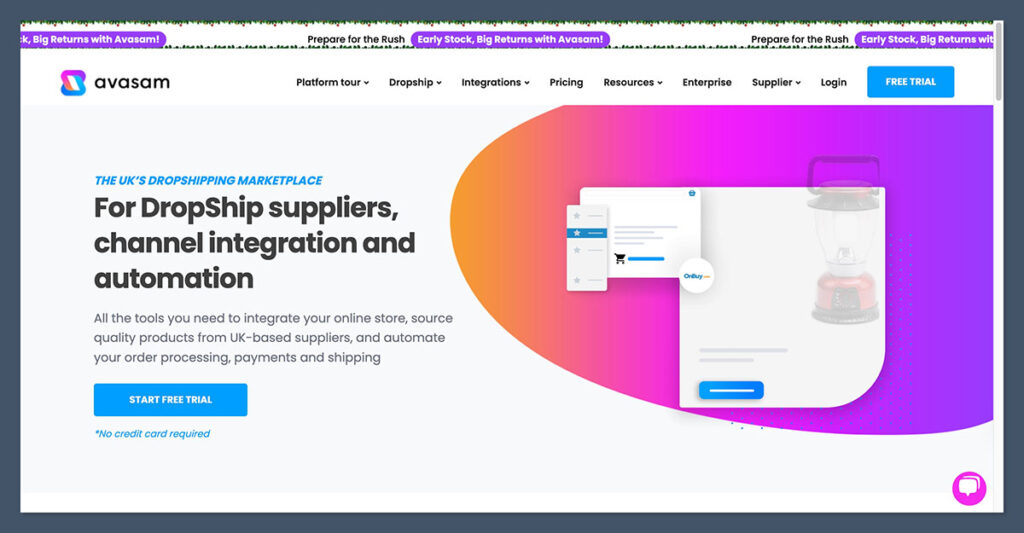
Avasam is the best UK dropshipping platform I’ve found for sellers who want a streamlined, automation-first experience with verified domestic suppliers.
Every supplier on the platform is UK-based and vetted, which removes the guesswork around shipping times and product quality that comes with international sourcing.
The platform connects directly with Shopify, WooCommerce, eBay, and Amazon, handling order routing, inventory sync, and price updates automatically.
For UK sellers who want to avoid the fulfilment headaches that come with managing overseas suppliers, Avasam keeps everything local and largely hands-off.
That said, the product catalog is smaller than what you’d find on global platforms like CJdropshipping or AliExpress. If you need access to a massive range of products across dozens of categories, Avasam may feel limiting.
Pros
- All suppliers are verified and UK-based
- Automated ordering and inventory sync
- Native Shopify, WooCommerce, eBay, and Amazon integrations
- Fast domestic shipping across the UK
- Free plan available to get started
Cons
- Smaller product catalog than global platforms
- Premium features require paid plans
- Limited customization for branding and packaging
- Less competitive pricing compared to China-sourced suppliers
How Much Does Avasam Cost?
Avasam offers a free plan that lets you list a limited number of products and test the platform. Paid plans unlock higher product limits, priority support, and advanced automation features. Pricing scales based on order volume and the number of active product listings, so costs grow alongside your store.
Avasam is suitable for:
- UK sellers who want guaranteed fast domestic shipping
- Store owners looking for hands-off automated fulfilment
- Beginners who want a vetted, low-risk supplier network
Avasam isn’t suitable for:
- Sellers who need a massive, global product catalog
- Stores focused on the lowest possible per-unit cost
- Businesses that need extensive custom branding on packaging
Why Use Avasam in 2026?
Post-Brexit customs checks and VAT rules have made international dropshipping to UK customers more complicated and more expensive.
Avasam sidesteps all of that by keeping the entire supply chain within the UK. For sellers targeting domestic customers, this means no surprise customs delays, no additional import duties eating into margins, and delivery times that compete with Amazon.
The automation layer also means you’re not manually forwarding orders or chasing tracking numbers, which matters once you’re processing more than a handful of orders per day.
#2. Spocket: Best for Brand-Focused Stores
- Type: App/marketplace
- UK shipping: UK/EU suppliers
- Free plan: No (14-day trial)
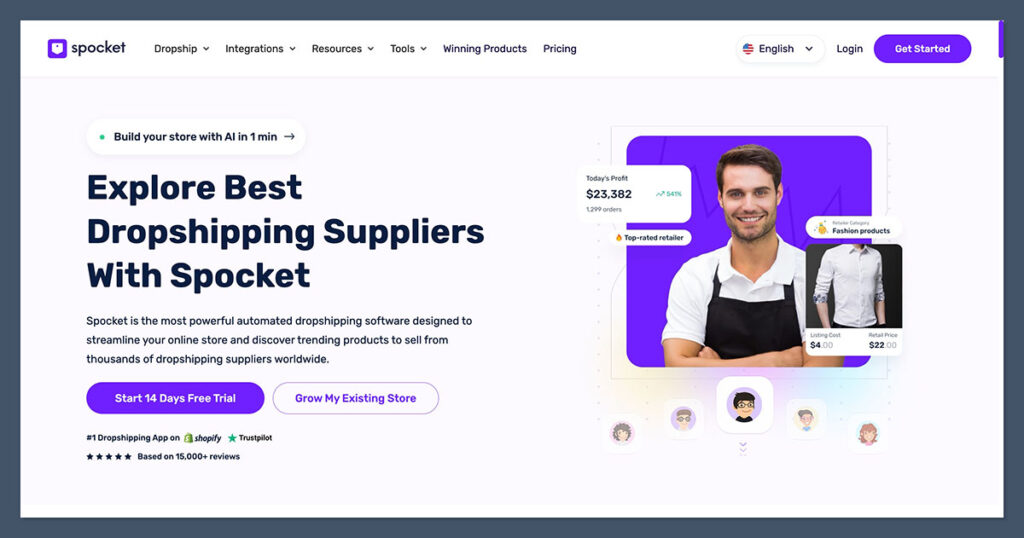
Spocket stands out for sellers who care about how their brand looks at every touchpoint, including what arrives in the customer’s hands.
The platform curates suppliers from the UK and EU, and its branded invoicing and custom packaging options let you present a cohesive brand experience from storefront to doorstep.
Integrations with Shopify and WooCommerce are solid, and the product catalog leans toward higher-quality items rather than the cheapest available option.
That positioning makes Spocket a strong fit for stores that compete on brand perception rather than rock-bottom pricing.
The trade-off is cost. Spocket’s subscription plans start higher than most competitors, and the curated catalog means fewer products overall. If you’re testing dozens of products to find winners, the smaller selection and monthly fee can slow you down.
Pros
- Curated UK and EU suppliers
- Branded invoicing and packaging options
- Strong Shopify and WooCommerce integrations
- Higher-quality product selection
Cons
- Monthly subscription required (starts at $39.99/mo)
- Smaller catalog than global marketplaces
- Not ideal for ultra-low-cost product testing
- Some product categories are underrepresented
How Much Does Spocket Cost?
Spocket’s paid plans start at $39.99 per month, with higher tiers unlocking premium products, more supplier access, and additional branding features.
There’s a 14-day free trial to test the platform before committing. No free plan is available for ongoing use.
Spocket is suitable for:
- Brand-conscious sellers who want professional packaging
- Stores targeting UK/EU customers with fast shipping
- Sellers willing to pay more for curated, higher-quality products
Spocket isn’t suitable for:
- Budget-focused sellers looking for the cheapest products
- Stores that need a massive, diverse catalog
- Beginners who aren’t ready for a monthly subscription
Why Use Spocket in 2026?
Consumers are increasingly skeptical of generic dropshipping stores that clearly ship from overseas warehouses.
Spocket lets you source locally produced or regionally stocked products and present them under your own brand, which builds the kind of trust that drives repeat purchases.
In a market where customer acquisition costs keep climbing, that trust translates directly into better retention and lifetime value.
#3. CJdropshipping: Best for Scalable Sourcing
- Type: Global marketplace
- UK shipping: UK warehouses available
- Free plan: Yes (free to use)
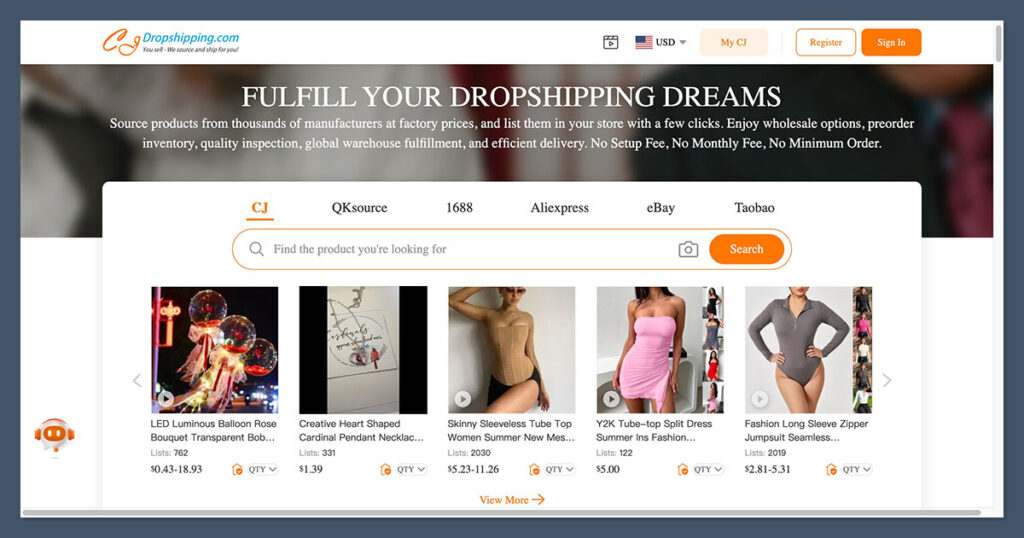
CJdropshipping is one of the most versatile sourcing platforms available, and its UK warehouse network is what earns it a spot this high on the list.
The platform offers a massive product catalog, free product sourcing requests, and custom packaging and branding services that most competitors charge extra for or don’t offer at all.

Where CJdropshipping really shines is scalability. You can start by testing products shipped from China, then move winning items to UK warehouse stock for faster delivery. That kind of flexibility is hard to find elsewhere.
The downside is complexity. CJdropshipping’s interface can feel overwhelming, especially for new sellers.
And while UK warehouse stock ships quickly, not every product is available domestically, so you’ll need to check warehouse availability on a per-product basis.
Pros
- Massive product catalog across all categories
- UK warehouses for fast domestic delivery
- Free product sourcing service
- Custom packaging and branding available
- No membership fees
Cons
- Interface can be overwhelming for beginners
- Not all products available in UK warehouses
- Quality control varies across product lines
- Customer support can be slow during peak periods
How Much Does CJdropshipping Cost?
CJdropshipping is free to use. There are no monthly subscription fees or membership costs. You pay only for the products you order plus shipping. Custom branding and packaging services are available at additional cost, and pricing varies depending on the service and order volume.
CJdropshipping is suitable for:
- Experienced sellers looking to scale with flexible sourcing
- Stores that want custom branding and packaging
- Sellers who test multiple products before committing to UK stock
CJdropshipping isn’t suitable for:
- Complete beginners who want a simple, curated experience
- Sellers who need every product shipped from the UK
- Stores that can’t absorb longer shipping times during product testing
Why Use CJdropshipping in 2026?
The ability to test products with low-cost international shipping and then scale winners into UK warehouse stock is a workflow that suits how most successful dropshippers actually operate.
Rather than committing to UK-only stock upfront (and limiting your product selection), CJdropshipping lets you validate demand first and optimize shipping later.
The free sourcing service also means you can request products you’ve spotted trending elsewhere, which keeps your catalog competitive without the overhead of managing supplier relationships directly.
#4. Syncee: Best for Multi-Channel Sellers
- Type: App/marketplace
- UK shipping: UK supplier filters available
- Free plan: Yes
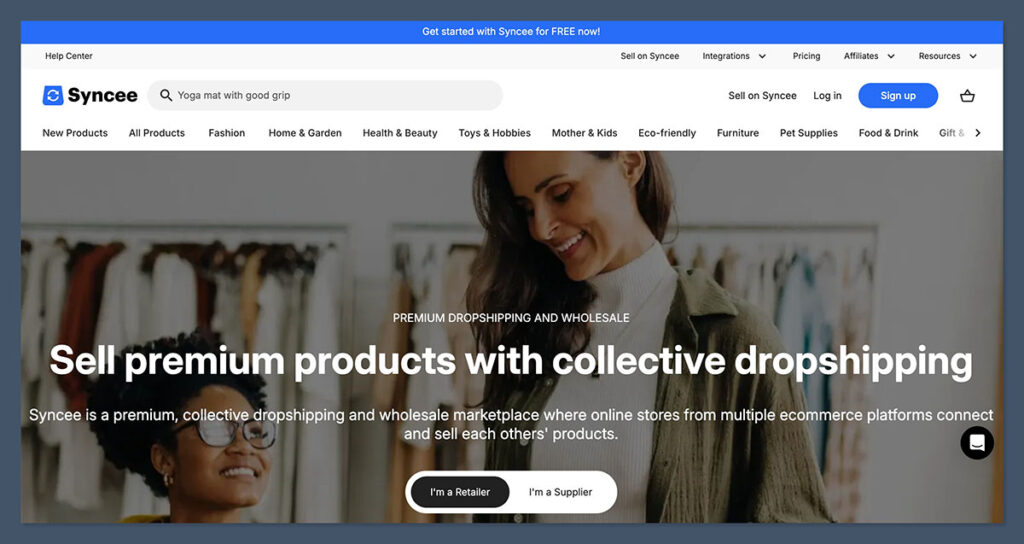
Syncee is built for sellers who operate across multiple platforms and need their inventory, pricing, and orders synced automatically.
The app integrates with Shopify, WooCommerce, Wix, BigCommerce, and several other platforms, making it one of the most flexible options for multi-channel operations.
UK seller filters let you narrow the supplier catalog to domestic or regional partners, and custom pricing rules mean you can set markup strategies that apply automatically across your product range.
The automated inventory and price sync reduces the risk of selling products that are out of stock or priced incorrectly.
The trade-off is that Syncee’s UK-specific catalog isn’t as deep as dedicated UK platforms like Avasam. You may need to spend more time filtering and vetting suppliers to build a reliable product lineup.
Pros
- Multi-platform integrations (Shopify, Woo, Wix, BigCommerce)
- Automated inventory and price sync
- Custom pricing rules and markup automation
- UK supplier filters
- Free starter plan
Cons
- UK supplier catalog is smaller than dedicated UK platforms
- Advanced features locked behind higher-tier plans
- Supplier vetting is less rigorous than Avasam
- Interface has a learning curve for new users
How Much Does Syncee Cost?
Syncee offers a free plan with limited product imports. Paid plans start at around $29 per month and scale up based on the number of products you manage and the automation features you need.
Higher tiers add bulk upload tools, priority support, and additional supplier access.
Syncee is suitable for:
- Sellers operating on multiple ecommerce platforms
- Store owners who want automated pricing and inventory sync
- Dropshippers who need flexibility across different sales channels
Syncee isn’t suitable for:
- Sellers who only operate on one platform
- Beginners who want a curated, plug-and-play experience
- Stores focused exclusively on UK-sourced products
Why Use Syncee in 2026?
Selling on a single platform is increasingly risky. Algorithm changes, fee increases, or policy shifts on any one marketplace can hit your revenue overnight.
Syncee’s multi-channel approach lets you spread that risk across Shopify, eBay, Amazon, Wix, and others while keeping your inventory and pricing consistent.
For UK sellers juggling multiple storefronts, the time savings from automated sync alone can justify the subscription cost.
#5. SaleHoo: Best for Finding Vetted Wholesalers
- Type: Directory/marketplace hybrid
- UK shipping: Verified UK wholesalers listed
- Free plan: No ($67/year or $127 lifetime)
SaleHoo takes a different approach from the app-based platforms above.
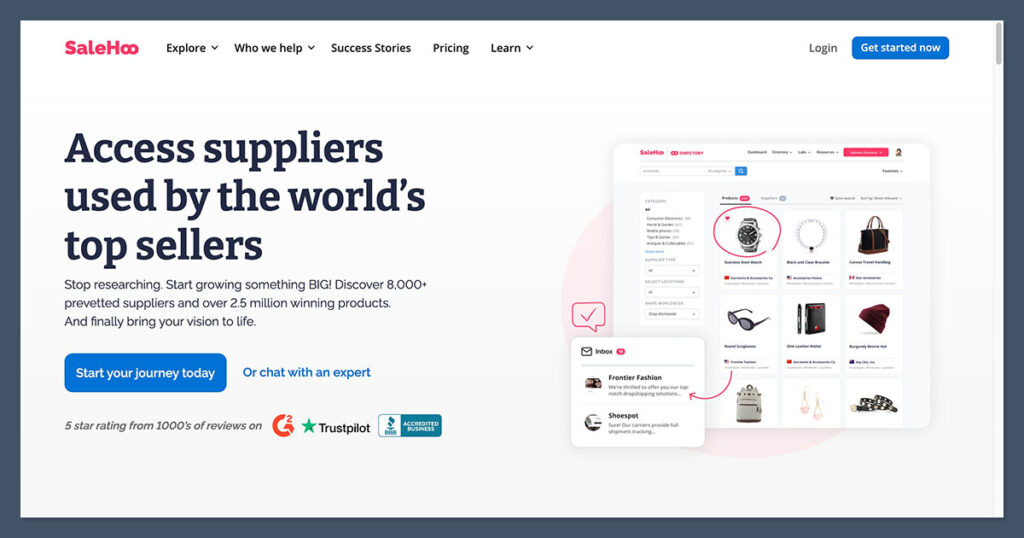
Rather than connecting you to a product feed you can import directly, SaleHoo gives you access to a directory of verified wholesalers and suppliers, many of which offer low or no minimum order quantities and are open to dropshipping arrangements.
The directory includes UK-based suppliers across a range of categories, and the verification process means you’re less likely to encounter scam suppliers or unreliable partners.
SaleHoo also offers market research tools and educational resources that can help newer sellers identify profitable niches.
The limitation is that SaleHoo is primarily a discovery tool. You’ll still need to contact suppliers individually, negotiate terms, and manage the relationship yourself. There’s no automated order routing or inventory sync built in.
Pros
- Verified supplier directory with UK wholesalers
- Low or no minimum order quantities common
- Market research tools included
- One-time lifetime access option available
Cons
- No automated ordering or inventory sync
- Requires manual supplier outreach and negotiation
- Annual or lifetime fee required for access
- Not a plug-and-play solution
How Much Does SaleHoo Cost?
SaleHoo offers two pricing options: $67 per year for ongoing access, or $127 for a one-time lifetime membership.
Both tiers include full directory access, market research tools, and customer support. There’s no free plan, but the lifetime option keeps long-term costs low.
SaleHoo is suitable for:
- Sellers who want to find unique suppliers not on mainstream apps
- Dropshippers comfortable with direct supplier negotiation
- Beginners who want research tools alongside supplier access
SaleHoo isn’t suitable for:
- Sellers who need a fully automated dropshipping workflow
- Store owners who don’t want to manage supplier relationships
- Businesses that need instant product imports
Why Use SaleHoo in 2026?
As more sellers crowd into the same supplier apps, product differentiation gets harder. Everyone on Spocket or Syncee can access the same catalogs, which means the same products end up competing for the same customers.
SaleHoo gives you access to suppliers that aren’t listed on the popular apps, which means less direct competition. The trade-off is more manual work, but for sellers willing to put in that effort, the payoff is a product lineup that most competitors can’t easily replicate.
#6. BigBuy: Best for EU/UK Automation
- Type: European fulfilment hub
- UK shipping: 2-4 day delivery from EU warehouses
- Free plan: No (membership required)
BigBuy operates as a European fulfilment hub with a broad catalog spanning electronics, home, garden, toys, beauty, and more.
The platform supports automated multi-channel order processing across Shopify, WooCommerce, PrestaShop, and major marketplaces, making it a solid option for UK sellers who also target EU customers.
UK delivery typically falls in the 2-4 business day range from BigBuy’s European warehouses. The automation is genuinely useful: product feeds, stock updates, and order routing all happen without manual intervention once set up.
The downside is that BigBuy requires a membership fee to access its full catalog and dropshipping features, and shipping from EU warehouses means post-Brexit duties may apply depending on product category and value. Margins can get tight once you factor in those additional costs.
Pros
- Large product catalog across many categories
- Strong multi-channel automation
- 2-4 day UK shipping from EU warehouses
- Good for sellers targeting both UK and EU markets
Cons
- Membership fee required
- Post-Brexit duties may affect margins on some products
- Shipping from EU, not UK warehouses
- Setup and integration can take time
How Much Does BigBuy Cost?
BigBuy requires a paid membership to access dropshipping features and wholesale pricing. Membership tiers vary based on the level of automation and catalog access you need. Contact BigBuy directly for current pricing, as rates change periodically.
BigBuy is suitable for:
- Sellers targeting both UK and EU customers
- Stores that need strong multi-channel automation
- Dropshippers looking for a wide general-merchandise catalog
BigBuy isn’t suitable for:
- Sellers who need next-day UK delivery
- Budget-focused stores that can’t absorb membership fees
- Businesses that only sell within the UK
Why Use BigBuy in 2026?
If your store serves both UK and EU customers, BigBuy eliminates the need to manage separate suppliers for each region. The platform’s automation handles the logistics across borders, and the product catalog is large enough to support stores in multiple niches.
For sellers who see the UK as part of a broader European strategy rather than a standalone market, BigBuy consolidates what would otherwise require multiple supplier relationships.
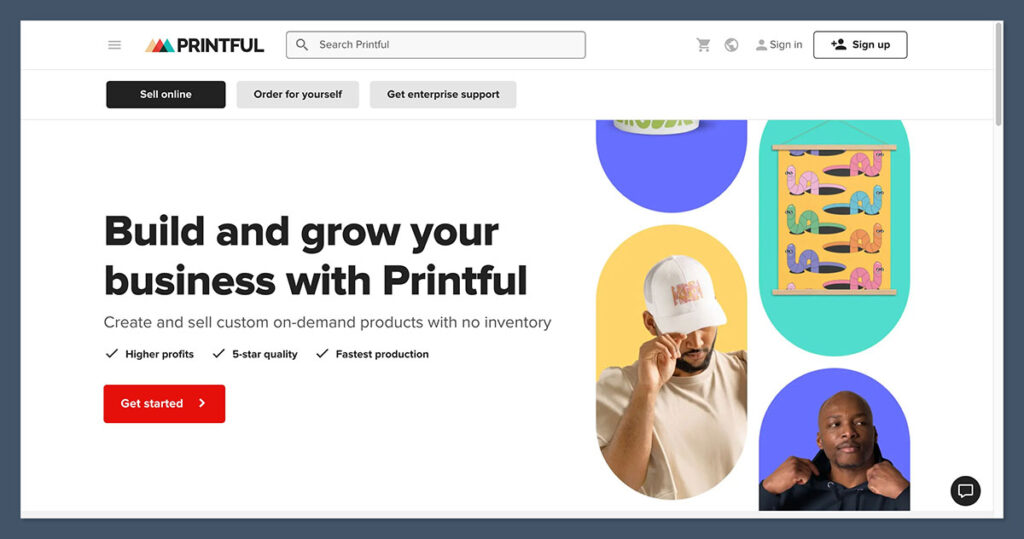
#7. Printful: Best for Print-on-Demand Quality
- Type: Print-on-demand
- UK shipping: Fulfilment facility near Birmingham
- Free plan: Yes (pay per order)
Printful is the largest and most established print-on-demand platform, and its UK fulfilment facility near Birmingham is what makes it relevant for this list.
Products ordered by UK customers are printed and shipped domestically, which means delivery times that compete with traditional suppliers rather than the 10-20 day waits that come with overseas POD production.
The product range covers apparel, accessories, home decor, and more, with strong branding options including custom labels, pack-ins, and branded packaging.
Integrations with Shopify, Etsy, WooCommerce, and Amazon make it easy to connect your store.
The trade-off is per-unit cost. Print-on-demand products are inherently more expensive to produce than pre-made inventory, so margins are tighter. Printful sits at the premium end of the POD market, which means you’ll need to price accordingly.
Pros
- UK fulfilment facility for fast domestic shipping
- Wide product range (apparel, home decor, accessories)
- Strong branding and custom packaging options
- No upfront costs or membership fees
- Integrates with all major ecommerce platforms
Cons
- Higher per-unit costs than traditional dropshipping
- Premium pricing compared to other POD platforms
- Some products not available from UK facility
- Margins can be tight without careful pricing
How Much Does Printful Cost?
Printful is free to use with no monthly subscription. You pay only for production and shipping when an order is placed. Pricing varies by product type, with apparel typically ranging from $8-$25 per unit for base production costs.
Branding add-ons like custom labels and packaging inserts carry additional per-order fees.
Printful is suitable for:
- Sellers building a brand around original designs
- Stores that need professional branding on packaging
- Creators and artists monetizing their work
Printful isn’t suitable for:
- Sellers who need the lowest possible per-unit cost
- Stores competing primarily on price
- High-volume sellers who’d benefit from bulk inventory
Why Use Printful in 2026?
Custom and personalized products continue to grow in demand, and Printful’s UK production capability means you can offer them without the shipping delays that turn UK customers away.
For sellers building a brand around original designs, whether that’s a clothing line, a home decor collection, or a merch store, Printful provides the production quality and branding tools to look professional from day one.
The no-inventory model also means zero upfront risk on product development.
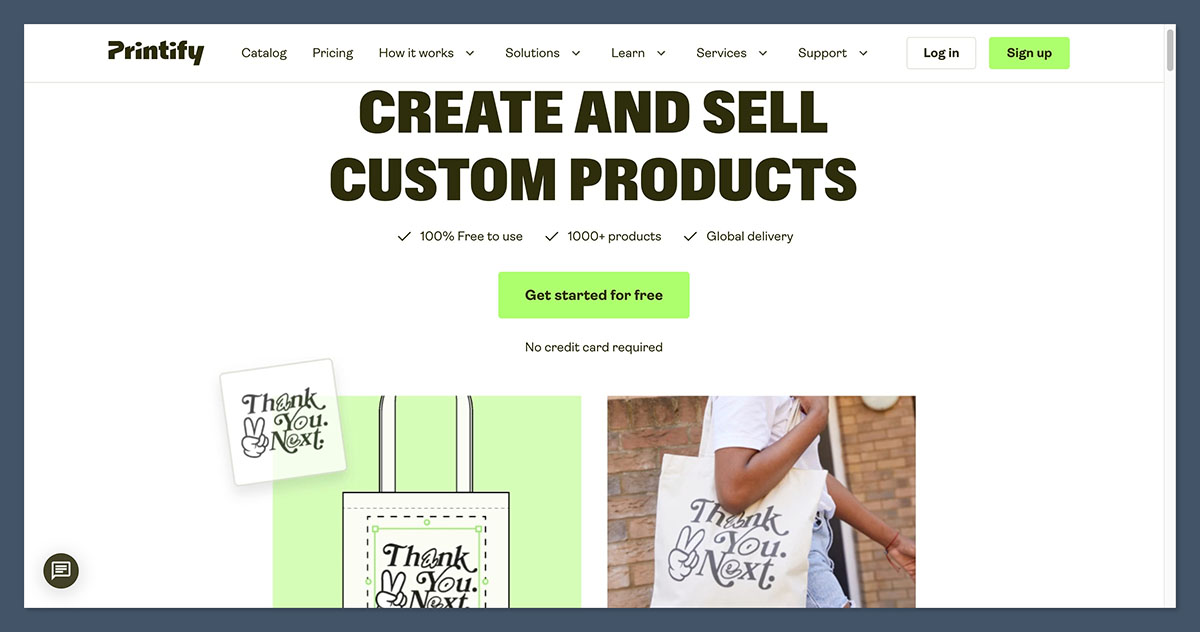
#8. Printify: Best for POD Price Flexibility
- Type: POD aggregator
- UK shipping: UK print providers available
- Free plan: Yes
Printify works differently from Printful. Rather than operating its own fulfilment facilities, Printify aggregates a global network of independent print providers, including several based in the UK.
This means you can compare pricing, production times, and product quality across multiple providers for the same product and choose the one that fits your store best.
That flexibility is Printify’s biggest advantage. You can often find lower per-unit costs than Printful by shopping across providers, and the free plan lets you list unlimited products without a monthly fee.
The catch is consistency. Because you’re relying on independent print providers, quality and turnaround times can vary. You’ll need to manually select UK-based providers if domestic shipping speed is a priority, and it’s worth ordering samples from each provider before selling to customers.
Pros
- Multiple print providers to compare pricing
- Often lower per-unit costs than Printful
- UK-based print providers available
- Free plan with unlimited product listings
- Large product catalog
Cons
- Quality varies across print providers
- Must manually select UK providers for fast shipping
- Less consistent branding experience than Printful
- Customer support can be slower for provider-side issues
How Much Does Printify Cost?
Printify’s free plan includes unlimited product listings and five stores. The Premium plan ($29.99/month) unlocks discounted product pricing of up to 20%, which can make a meaningful difference at higher volumes. Like Printful, you pay per order for production and shipping on top of any subscription.
Printify is suitable for:
- POD sellers who want to compare and optimize production costs
- Stores that need a large, varied product catalog
- Budget-conscious sellers starting with a free plan
Printify isn’t suitable for:
- Sellers who want guaranteed consistent quality across all orders
- Stores that need premium branding and packaging
- Sellers who don’t want to manage provider selection
Why Use Printify in 2026?
Margins matter more than ever in print-on-demand, and Printify’s multi-provider model gives you the ability to optimize costs without being locked into one production partner.
If a UK provider raises prices or slows down, you can switch to another without rebuilding your product listings. That flexibility is especially valuable as production costs fluctuate and new print providers enter the market.
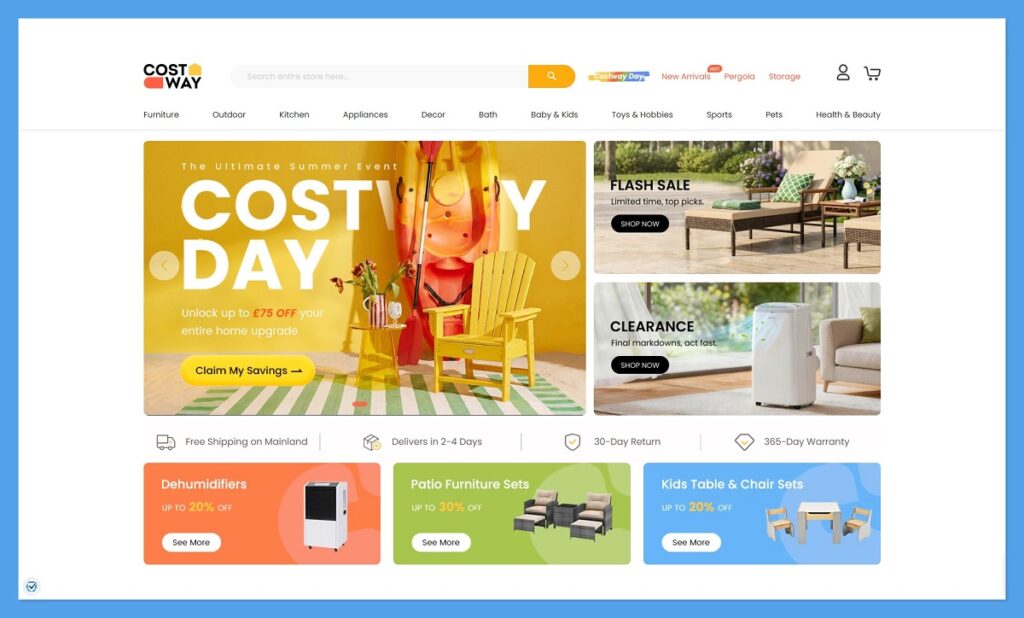
#9. Costway UK: Best Free Supplier Program
- Type: Direct supplier
- UK shipping: UK warehouses, 2-4 business days
- Free plan: Yes (free to join)
Costway UK runs an official dropshipping program with no joining fees, no minimum order requirements, and a broad catalog that spans furniture, home goods, fitness equipment, garden products, and outdoor gear.
Products ship from UK warehouses with 2-4 business day delivery.
The program is straightforward: you sign up, access product data feeds, and start listing. Costway handles fulfilment and shipping directly. For sellers in the home and garden niche, this is one of the simplest supplier relationships to set up.
The downside is that you’re tied to a single supplier’s catalog and pricing. If Costway raises prices or discontinues a product, you have no alternative within the same program. And because anyone can join the program, you’ll be competing with other dropshippers selling the exact same products.
Pros
- No joining fee or monthly subscription
- UK warehouses with 2-4 day delivery
- Broad home, garden, and fitness catalog
- No minimum order quantity
- Product data feeds provided
Cons
- Single supplier dependency
- High competition from other dropshippers selling same products
- Limited branding options
- Catalog focused on home/garden (not general merchandise)
How Much Does Costway UK Cost?
Costway’s dropshipping program is free to join and has no ongoing subscription fees. You purchase products at wholesale pricing and sell at your own markup. No minimum order quantities apply, so you can start with a single order.
Costway UK is suitable for:
- Sellers focused on home, garden, and furniture niches
- Beginners who want a zero-cost entry point
- Stores that need fast UK shipping without a subscription
Costway UK isn’t suitable for:
- Sellers who need a multi-category general merchandise catalog
- Stores that want custom branding on products or packaging
- Businesses that need a unique product selection
Why Use Costway UK in 2026?
Home and garden is one of the strongest dropshipping categories in the UK, with consistently high demand and average order values that support healthy margins.
Costway’s free program and UK-based fulfilment remove the two biggest friction points for new sellers: upfront cost and shipping speed.
It’s a low-risk way to enter the home goods niche, and the product range is broad enough to test multiple subcategories without switching suppliers.
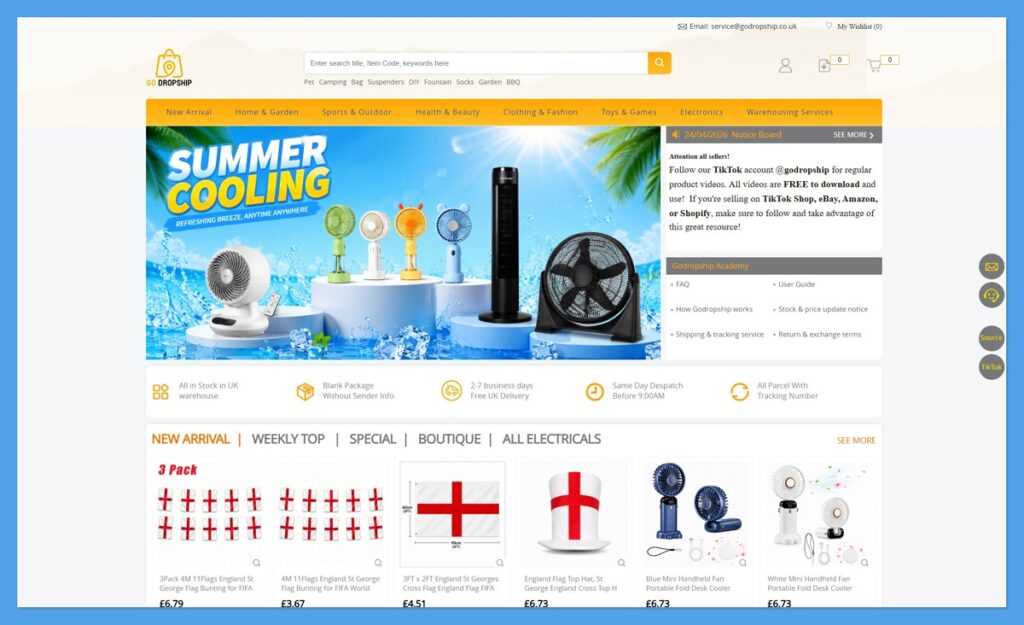
#10. GoDropship: Best for Simple, Fast UK Shipping
- Type: Direct supplier
- UK shipping: Royal Mail and Parcelforce
- Free plan: Yes (free to join)
GoDropship keeps things simple. It’s a UK-focused supplier that ships via Royal Mail and Parcelforce, which means your customers get the tracking and delivery experience they’re already familiar with.
There’s no complex platform to learn, no app marketplace to navigate, and no subscription fee to pay.
The product range covers general merchandise categories, and the focus is on fast, reliable UK delivery rather than custom branding or extensive automation. For sellers who want to list products and have them shipped without friction, GoDropship delivers on that promise.
The simplicity is also the limitation. There are no built-in automation tools, no branded packaging options, and no multi-channel integrations. If your operation grows beyond basic order volumes, you’ll likely outgrow GoDropship and need a more feature-rich platform.
Pros
- Fast UK delivery via Royal Mail and Parcelforce
- No subscription or membership fees
- Simple, straightforward setup
- Familiar carriers that customers trust
Cons
- No built-in automation or inventory sync
- No branded packaging options
- Limited multi-channel integrations
- May not scale well for high-volume stores
How Much Does GoDropship Cost?
GoDropship is free to join with no ongoing fees. You pay product cost plus shipping per order. Pricing is straightforward with no hidden charges or tiered plans.
GoDropship is suitable for:
- Beginners who want the simplest possible setup
- Small-scale sellers testing a niche
- Stores that prioritize familiar, trusted UK carriers
GoDropship isn’t suitable for:
- High-volume sellers who need automation
- Stores that want branded packaging
- Multi-channel operations needing inventory sync
Why Use GoDropship in 2026?
Not every dropshipping store needs a complex automation stack. If you’re running a small operation, testing a niche, or just starting out and want to keep things as simple as possible, GoDropship removes the overhead.
The Royal Mail and Parcelforce shipping also means your customers get a delivery experience that feels professional and local, which can reduce “where’s my order” support queries that eat into your time.
Other UK Dropshipping Suppliers Worth Knowing
The ten suppliers above cover the strongest options across the main categories, but they’re not the only players in the UK market. Here are additional suppliers that serve specific niches or use cases well:
Niche Product Suppliers
VidaXL UK carries a large catalog of budget-friendly home and garden products with local stock and short UK delivery times. It’s a good option if you’re building a store around affordable home furnishings and want to keep per-unit costs low.
Puckator specializes in gifts, novelty items, and quirky homeware. If you’re running a niche gift store or seasonal shop, Puckator’s product range fills a gap that general merchandise suppliers don’t cover well.
AWDropship focuses on electronics and gadgets with private-label fulfilment and 1-3 day UK delivery. For sellers in the tech accessories space, it offers a tighter, more focused catalog than the broad marketplaces.
Directories for Finding More Suppliers
The Wholesaler UK is a large trade directory listing over 200,000 suppliers across many niches. It’s a discovery tool rather than a dropshipping platform, so you’ll need to vet individual suppliers for dropshipping suitability, shipping speed, and reliability.
eSources offers a verified UK/EU B2B wholesaler directory that’s useful for finding niche or regional suppliers beyond the main apps. Like The Wholesaler UK, it requires manual outreach and negotiation.
Marketplace Options
AliExpress UK warehouse listings offer roughly 3-5 day delivery for products stocked domestically, and tight integration with apps like DSers makes it a common choice for product testing. Delivery times for non-UK stock remain a drawback.
Alibaba UK is worth exploring when you’re ready to transition from pure dropshipping to private label. The “Ships from UK” filter surfaces local inventory with flexible order volumes, and branding options open up at this level.
Additional Print-on-Demand Suppliers
Inkthreadable handles all fulfilment within the UK and emphasizes eco-friendly products. For stores targeting sustainability-conscious customers, it’s a more aligned choice than the larger POD platforms.
Gelato uses a network of UK print partners with a focus on fast local delivery, and is particularly popular for posters and wall art.
Prodigi specializes in prints and photo products with quick UK turnaround and scale-friendly pricing. If your store focuses on photography prints or custom art, Prodigi’s niche expertise is an advantage.
Twofifteen is a UK POD producer known for local production and white-label service, and is frequently highlighted in UK-specific POD roundups.
How Do I Choose the Right UK Dropshipping Supplier?
Choosing the right supplier depends on your store’s niche, budget, and how much of the fulfilment process you want automated. There’s no single best option for everyone, but evaluating these factors will help you narrow the field:
- UK warehouse availability: Does the supplier stock products in the UK? Domestic shipping is the single biggest factor in customer satisfaction for UK dropshipping stores. Suppliers without UK stock typically mean 7-20 day delivery times.
- Product range and niche fit: Does the catalog match what you plan to sell? A massive catalog isn’t always better. A focused supplier with strong products in your niche can outperform a general marketplace.
- Automation and integrations: Does the supplier connect with your ecommerce platform? Automated inventory sync, order routing, and price updates save hours per week at scale. Manual order processing works when you’re starting but breaks down quickly.
- Pricing structure: What are the upfront and ongoing costs? Factor in subscription fees, per-order costs, shipping rates, and any membership charges. A “free” platform with high per-unit costs may end up more expensive than a paid one with better wholesale pricing.
- Branding options: Can you add custom packaging, labels, or invoicing? If you’re building a brand rather than running a generic store, branding capabilities matter. Spocket and Printful lead here, while simpler suppliers like GoDropship don’t offer this.
- Supplier vetting: How are suppliers verified? Platforms like Avasam and SaleHoo vet their suppliers. On marketplaces like AliExpress, you’re responsible for due diligence. The more vetting the platform handles, the lower your risk of quality issues.
- Scalability: Can the supplier handle increased order volume? Some platforms work well for 10 orders per day but struggle at 100. Check whether the supplier has volume-based pricing tiers or capacity limits that could affect growth.
- Return and refund policies: How does the supplier handle returns? UK consumer protection laws give customers strong return rights. Make sure your supplier’s return process doesn’t leave you absorbing costs or managing international returns on their behalf.
How We Evaluated UK Dropshipping Suppliers
To determine our rankings and recommendations, we evaluated each supplier across six core criteria. Each criterion was weighted to reflect what matters most to UK-based dropshipping sellers:
| Criterion | Weight | What We Assessed |
|---|---|---|
| UK Shipping Speed | 25% | Warehouse locations, average delivery times to UK customers, carrier options, and tracking reliability |
| Product Range & Quality | 20% | Catalog breadth and depth, product quality consistency, niche coverage, and sample order experience |
| Automation & Integrations | 20% | Platform integrations (Shopify, WooCommerce, etc.), inventory sync, automated ordering, and pricing automation |
| Pricing & Value | 15% | Subscription costs, per-unit pricing, shipping rates, hidden fees, and overall margin potential |
| Ease of Use | 10% | Onboarding process, interface clarity, documentation quality, and learning curve for new sellers |
| Branding & Customization | 10% | Custom packaging options, branded invoicing, private-label capabilities, and white-label services |
We prioritized UK shipping speed as the highest-weighted factor because delivery time is the most common pain point for UK dropshipping customers and the biggest differentiator between suppliers.
Key Takeaways
- Avasam is our top-rated UK dropshipping supplier, offering a verified domestic marketplace with automated ordering and inventory sync built for Shopify stores
- Pricing varies widely: some suppliers like GoDropship and Costway UK charge no membership fees, while platforms like Spocket and SaleHoo require monthly subscriptions starting around $39-$67/month
- UK warehouse stock matters more than anything else for delivery speed. Suppliers like Avasam, CJdropshipping, Costway UK, and GoDropship all ship from UK locations with 1-4 day delivery
- Print-on-demand suppliers like Printful and Printify belong in a separate category. They handle production and fulfilment for custom products, but per-unit costs are higher than traditional dropshipping
- Directories like SaleHoo and eSources are useful for discovering new suppliers, but you’ll need to vet individual sellers yourself before committing
Final Verdict: Which UK Dropshipping Supplier Do I Recommend?
Avasam is the strongest overall choice for UK dropshipping in 2026.
Its verified domestic supplier network, automated ordering, and native platform integrations make it the most complete package for sellers focused on the UK market.
You get fast shipping, reliable suppliers, and hands-off fulfilment without the post-Brexit complications of international sourcing.
That said, no single supplier covers every use case. If you’re building a brand and want premium packaging, Spocket is the better fit.
If you need massive product variety and the flexibility to scale, CJdropshipping gives you more room to grow. For print-on-demand, Printful’s UK facility and branding tools are hard to beat.
And if you’re just starting out and want zero upfront costs, Costway UK and GoDropship both let you begin selling with no subscription.
My recommendation: start with one or two suppliers that match your niche and budget, order samples to test quality and shipping speed firsthand, and expand your supplier network as your store grows.
The best UK dropshipping operation usually relies on more than one supplier.
UK Dropshipping Suppliers: FAQ
What is the best UK dropshipping supplier for beginners?
Avasam is the best option for beginners because it verifies all suppliers, automates order processing, and only works with UK-based partners. This removes the biggest risks new sellers face: unreliable suppliers, slow international shipping, and manual order management. GoDropship and Costway UK are also good starting points if you want a no-fee, no-commitment setup.
Can I dropship in the UK after Brexit?
Yes, but Brexit has added complexity to international sourcing. Products shipped from the EU to UK customers may incur customs duties and VAT, which affects margins and delivery times. Using suppliers with UK-based warehouses (like Avasam, CJdropshipping UK, or Costway UK) avoids these issues entirely, which is why UK warehouse availability was the highest-weighted factor in our evaluation.
Do I need a business license to dropship in the UK?
You don’t need a specific license to start dropshipping in the UK, but you are legally required to register as a sole trader with HMRC or form a limited company if your revenue exceeds the VAT threshold. You’ll also need to comply with consumer protection regulations, including providing clear return policies and accurate product descriptions.
How fast is UK dropshipping delivery?
Suppliers with UK warehouses typically deliver within 1-4 business days. EU-based suppliers like BigBuy average 2-4 days. International suppliers shipping from China average 7-20 days, though some offer ePacket or express options that reduce this. UK warehouse stock is consistently the fastest option.
What’s the difference between dropshipping suppliers and print-on-demand?
Traditional dropshipping suppliers stock pre-made products and ship them on your behalf. Print-on-demand suppliers produce custom products (like printed t-shirts or posters) only when an order is placed. POD offers more product uniqueness and brand control but comes with higher per-unit costs. Many UK sellers use both: traditional suppliers for general merchandise and POD for branded or custom items.
Can I use multiple UK dropshipping suppliers at once?
Yes, and most successful dropshipping stores do. Using multiple suppliers lets you offer a wider product range, reduce dependency on any single partner, and optimize for speed, cost, or product quality depending on the category. Platforms like Syncee and Shopify make it relatively straightforward to manage multiple supplier feeds in one store.